
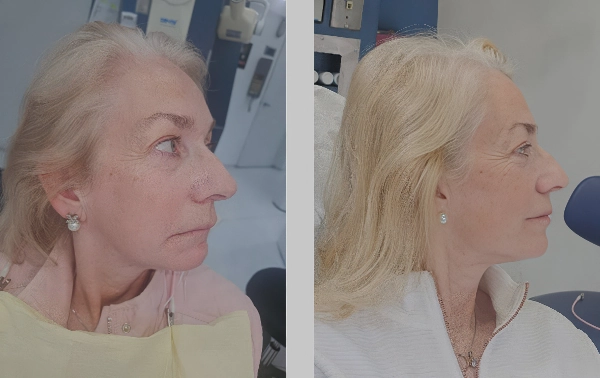
Beyond the Golden Proportion—Creating Smiles That Complement Your Face
Part 4 of our comprehensive series on achieving natural-looking smile transformations
In our previous installments, we’ve explored Dr. Goodman’s philosophy, his three-tier preparation approach, and the critical science of translucency. Today, we’re addressing perhaps the most complex aspect of cosmetic dentistry: creating facial harmony through smile design that considers not just your teeth, but your entire face.
This is where cosmetic dentistry transcends technical skill and becomes true artistry. It’s one thing to create beautiful veneers—it’s quite another to create veneers that make you more beautiful by harmonizing with your unique facial features, proportions, and personality.
The Limitations of Cookie-Cutter Dentistry
Walk into many cosmetic dental offices, and you’ll see the same smile on display in every before-and-after photo: large, blindingly white, perfectly uniform teeth that look like they came from the same mold. This is the “Hollywood smile” taken to its extreme—a one-size-fits-all approach that ignores the fundamental principle of facial harmony.
The problem isn’t that these smiles are technically flawed. Often, they’re executed with precision and skill. The issue is that they’re generic, disconnected from the individual’s unique facial architecture. A smile that looks stunning on a 25-year-old fashion model might look completely wrong on a 55-year-old executive. A smile that complements oval facial features might overwhelm someone with delicate, heart-shaped features.
Dr. Goodman’s approach stands in stark contrast to this standardization. His philosophy acknowledges that true beauty isn’t about perfection—it’s about proportion, balance, and harmony. It’s about creating a smile that looks like it belongs to you, not to someone else.
The Golden Proportion: A Guide, Not a Gospel
Cosmetic dentists often reference the “golden proportion” when discussing ideal tooth dimensions. This mathematical ratio, approximately 1.618:1, appears throughout nature and art, from the spiral of a nautilus shell to the proportions of the Parthenon. In dentistry, it’s commonly applied to determine the ideal width-to-length ratio of front teeth and the relative sizes of adjacent teeth.
The Traditional Application
The classical golden proportion rule in dentistry suggests:
- The central incisors (front two teeth) should have a width-to-length ratio of approximately 1:1.6
- When viewed from the front, each tooth should appear about 60% the width of the tooth next to it, moving outward from the center
- The overall smile should follow these proportional relationships for optimal aesthetics
For decades, this formula was treated as gospel in cosmetic dentistry. Dentists would meticulously measure and calculate, striving to achieve these exact proportions in every case.
Dr. Goodman’s Revolutionary Insight
Here’s where Dr. Goodman’s extensive experience—over 10,000 veneer cases—has led to a crucial insight: the golden proportion is a useful guide, but applying it rigidly to every case can actually create unnatural results.
As he explains in his approach: “Cosmetic dentists typically follow the ‘golden proportion’ rule to determine the proper length of the front teeth. But it is not a ‘one formula fits all’ solution, and it shouldn’t be applied to every case. Ironically, in some cases the golden proportion rule can lead to teeth that appear out of proportion.”
This is a profound observation. A formula that works beautifully for one patient might create artificial-looking results for another. Why? Because faces are infinitely variable, and teeth must harmonize with the specific features they’re set within.
When to Apply—and When to Adapt
Dr. Goodman’s approach involves:
Evaluating the individual case:
- Facial shape and proportions
- Lip fullness and movement
- Gum display when smiling
- Existing tooth proportions
- Age and gender considerations
- Personal aesthetic preferences
Using the golden proportion as a starting point, not an endpoint. It provides a framework for thinking about proportions, but the final design must be adjusted based on what actually looks harmonious for that specific patient.
Viewing the smile from a distance, not just under magnification. What matters is how the overall smile looks in real-world situations—when you’re talking to someone, when you’re laughing at dinner, when you’re captured in a photograph. Sometimes technically “perfect” proportions look rigid and unnatural in these contexts.
Trusting artistic judgment informed by experience. This is where Dr. Goodman’s 10,000+ cases become invaluable. He’s seen what works and what doesn’t across countless facial types, ages, and aesthetic goals.
The Elements of Facial Harmony
Creating a smile that enhances facial harmony requires considering multiple interconnected factors. Let’s explore the key elements that Dr. Goodman evaluates when designing Class-1 veneers.
- Facial Shape and Proportions
Your overall facial shape dramatically influences what smile design will look most natural and attractive.
Oval faces are considered the most balanced and can accommodate a wide range of smile designs. There’s flexibility in tooth size and shape without overwhelming or underwhelming the facial structure.
Round faces often benefit from slightly longer, more vertical tooth proportions that create visual length and help balance the face’s width.
Square faces with strong jawlines can handle bolder, slightly wider teeth but should avoid overly square tooth shapes that mirror and exaggerate the facial squareness.
Heart-shaped faces with narrower chins often look best with delicate, refined tooth proportions that don’t overwhelm the lower face.
Long, rectangular faces typically benefit from teeth that aren’t excessively long, as this can further elongate the facial appearance.
The key is creating balance—neither competing with dominant facial features nor disappearing into the face. The smile should enhance your natural beauty, not fight against it.
- Lip Line and Smile Dynamics
One of the most critical yet frequently overlooked aspects of smile design is how your lips frame your teeth when you smile. This isn’t just about the static, posed smile—it’s about the natural, dynamic smile that appears in real life.
High smile line (gummy smile): If you show significant gum tissue when smiling, tooth length and gum positioning become critical considerations. Dr. Goodman may recommend combining gum contouring with veneer placement to achieve the optimal tooth-to-gum ratio.
Medium smile line: The most common pattern, where a small amount of gum shows when smiling naturally. This provides good flexibility in tooth design.
Low smile line: When little to no gum shows, even during a full smile. In these cases, tooth length must be carefully calculated—teeth that are too long will never be fully visible and may look disproportionate.
Dr. Goodman also considers how your lips move when you talk, laugh, and make various expressions. Teeth that look perfect in a posed smile might look awkward when you’re speaking or caught in natural, candid moments. The design must work dynamically, not just statically.
- Gender and Age Considerations
Facial harmony isn’t just about geometric proportions—it’s about creating teeth that are appropriate for who you are.
Gender-appropriate design:
For women, teeth are typically designed with:
- Softer, more rounded contours
- Slightly more delicate proportions
- Gentle, feminine curves
- Elegant rather than bold characteristics
For men, teeth often feature:
- Stronger, more angular edges
- Slightly more robust proportions
- Subtle masculine strength
- Confidence without delicacy
These aren’t rigid rules—some women prefer bolder teeth, and some men want refined elegance. The point is that Dr. Goodman considers gender as one factor in creating harmony.
Age-appropriate design:
Teeth naturally change as we age, and veneers should reflect this reality. Designing the same youthful smile for everyone, regardless of age, creates disharmony.
For younger patients (20s-30s), teeth can be:
- Slightly longer with more prominent incisal edges
- Brighter while still maintaining natural translucency
- More defined and sharp-edged
For middle-aged patients (40s-50s), teeth should show:
- Subtle signs of natural wear at the edges
- Slightly shorter proportions than in youth
- Warmth in color rather than ultra-bright whites
- Character without looking aged or worn
For mature patients (60+), teeth benefit from:
- Proportions that reflect natural wear patterns
- Warmer, more natural tones
- Subtle imperfections that add authenticity
- Length that supports facial structure without looking artificial
Creating age-appropriate teeth doesn’t mean making them look damaged or old—it means making them look naturally yours at your current stage of life.
- Skin Tone and Coloring
Your skin tone, hair color, and overall coloring influence what shade and tone of veneers will look most natural and harmonious.
Warmer skin tones (golden, olive, or warm brown undertones) typically pair beautifully with:
- Warmer tooth shades with ivory or cream undertones
- Avoidance of ultra-cool, blue-white shades that can clash
- Natural depth that complements the warmth of the complexion
Cooler skin tones (pink, blue, or cool undertones) often look best with:
- Slightly cooler tooth shades
- Brighter whites without excessive yellow
- Clean, crisp appearance that harmonizes with cool coloring
Very fair complexions require careful consideration to avoid:
- Teeth that are too white, creating harsh contrast
- Excessive brightness that washes out the face
- Lack of warmth that can make the smile look artificial
Darker complexions can typically carry:
- Brighter, more dramatic whites
- Greater contrast between teeth and skin
- Bolder smile designs that won’t overwhelm
Dr. Goodman evaluates these factors during your consultation, often using shade guides and digital visualization to find the optimal tone that enhances your natural coloring rather than competing with it.
- Bite Relationship and Jaw Position
True facial harmony extends beyond aesthetics to function. The relationship between your upper and lower teeth—your bite—affects not just how your smile looks but how your entire face is supported.
Proper vertical dimension refers to the height between your upper and lower jaws when your teeth are together. When teeth are worn down or improperly designed, this vertical dimension collapses, which can:
- Create a sunken appearance in the lower face
- Contribute to premature aging and wrinkle formation
- Affect jaw joint (TMJ) function and comfort
- Make the jawline appear less defined
Dr. Goodman’s expertise in full-mouth rehabilitation means he doesn’t just design individual teeth—he considers how the entire bite works together. When indicated, he may recommend:
- Restoring proper vertical dimension through veneer design
- Addressing bite misalignment that affects facial support
- Creating harmony between upper and lower teeth
- Ensuring comfortable, healthy function alongside aesthetics
This comprehensive approach is what separates cosmetic enhancement from true smile rehabilitation. The result is not just a beautiful smile, but improved facial support that can contribute to a more youthful appearance.
- Symmetry Without Rigidity
Facial symmetry is often cited as a key component of beauty, and there’s truth to this. Balanced, symmetrical features are generally perceived as more attractive. However, perfect symmetry in nature is extremely rare—and attempting to create it artificially can actually make a smile look less natural.
The midline consideration:
The dental midline—the imaginary line between your two front teeth—ideally aligns with the midline of your face. However, few people have perfect facial midlines, and forcing perfect dental alignment can actually create asymmetry with other facial features.
Dr. Goodman evaluates:
- Whether the facial midline is centered or naturally offset
- How the smile midline relates to the nose, lips, and chin
- Whether correcting the dental midline would enhance or detract from overall harmony
- Patient comfort with slight asymmetries that feel natural
Natural asymmetry:
Your face is naturally asymmetric—one eye might be slightly higher, one side of your smile might be broader, your nose might favor one direction. Creating perfectly symmetric teeth without considering these natural variations can make the smile look disconnected from the face.
The goal is pleasing balance, not robotic uniformity. Dr. Goodman creates harmony that works with your natural facial characteristics rather than imposing artificial perfection upon them.
The Consultation: Where Facial Harmony Begins
Understanding how all these factors work together requires extensive experience and artistic vision. During your consultation, Dr. Goodman conducts a comprehensive facial harmony assessment that includes:
Comprehensive photography from multiple angles, capturing:
- Full face views, smiling and at rest
- Profile views showing facial proportions
- Close-up smile views showing tooth and gum display
- Natural, candid expressions
Facial analysis evaluating:
- Overall facial shape and proportions
- Relationship between facial thirds
- Lip fullness, movement, and position
- Gum display and smile line
- Skin tone and coloring
Smile dynamics assessment examining:
- How you smile naturally versus posed
- What you show when talking versus smiling
- Your comfort and natural expression patterns
- Any asymmetries in smile movement
Discussion of preferences exploring:
- What you like and dislike about your current smile
- Reference smiles you find attractive (within realistic parameters)
- Your lifestyle, profession, and personal style
- Whether you prefer natural subtlety or dramatic transformation
This comprehensive approach ensures that the final design enhances your unique facial harmony rather than imposing a generic aesthetic.
Real-World Application: Facial Harmony in Practice
Let’s look at how Dr. Goodman applies facial harmony principles to create transformative yet natural results:
Case Example 1: The Natural Enhancement
A patient with naturally smaller teeth desires a fuller, more confident smile. Rather than applying the golden proportion formula rigidly, Dr. Goodman:
- Evaluates the patient’s oval facial shape, which can accommodate fuller teeth
- Considers the medium smile line, allowing for appropriate tooth length
- Designs minimal-prep veneers that add volume while maintaining natural proportions
- Creates subtle asymmetries that prevent the “too perfect” appearance
- Chooses a warm, natural tone that complements the patient’s skin tone
The result: A fuller, more youthful smile that looks completely natural and age-appropriate.
Case Example 2: The Balanced Correction
A patient with a gummy smile and short teeth seeks improvement. Dr. Goodman:
- Combines gum contouring to reduce excess gum display
- Designs veneers that establish proper tooth-to-gum proportions
- Considers the patient’s strong jawline and square face shape
- Creates teeth that are elegant rather than overly bold
- Achieves balance between the upper and lower face
The result: A harmonious smile that transforms the gum display while perfectly suiting the patient’s facial structure.
Case Example 3: The Age-Appropriate Transformation
A mature patient wants improvement without looking “done.” Dr. Goodman:
- Designs teeth with natural wear characteristics appropriate for the patient’s age
- Chooses warmer tones rather than ultra-bright whites
- Creates subtle imperfections that add authenticity
- Establishes length that supports facial structure without looking artificial
- Considers the patient’s professional image and lifestyle
The result: A rejuvenated smile that looks naturally beautiful, not obviously cosmetic.
Beyond the Golden Proportion: The Art of Seeing
What makes Dr. Goodman’s approach to facial harmony so effective is his ability to see beyond formulas and truly evaluate each patient as a unique individual. This artistic vision, developed through thousands of cases and decades of experience, allows him to create smiles that enhance natural beauty rather than imposing artificial standards.
The golden proportion has its place as a guide, but facial harmony requires something more: the ability to see how teeth, lips, gums, and facial features work together as an integrated whole. It requires understanding not just what looks good in theory, but what looks natural and harmonious in reality.
In our next installment, we’ll explore the art of imperfection—how Dr. Goodman creates character and authenticity in veneers by strategically incorporating subtle “flaws” that make them indistinguishable from natural teeth. We’ll examine why perfection is the enemy of natural beauty, and how controlled imperfections create smiles that look real rather than manufactured.
This is Part 4 of our comprehensive series on achieving natural-looking smile transformations with Class-1 veneers. Read Part 1 to learn about Dr. Goodman’s philosophy, Part 2 to understand the three-tier preparation approach, and Part 3 to explore the science of translucency. Stay tuned for Part 5, where we’ll delve into the art of creating natural imperfections.
Ready to discover how facial harmony can transform your smile? Contact Dr. Goodman’s Beverly Hills office at 310-860-9311 to schedule your personalized consultation. With comprehensive facial analysis and artistic vision refined through 10,000+ cases, Dr. Goodman creates smiles that enhance your unique natural beauty.